
Table of Contents
# Introduction to Deep Learning
Deep learning is a kind of machine learning that has become a game-changing technology in recent years. Deep learning in 2026 revolutionized how we deal with tough problems by letting machines figure everything out for themselves. In this essay we dive into the field of deep learning, its significance, libraries, applications, and how it can change the course of history.
Deep Learning in 2026: What Is It?
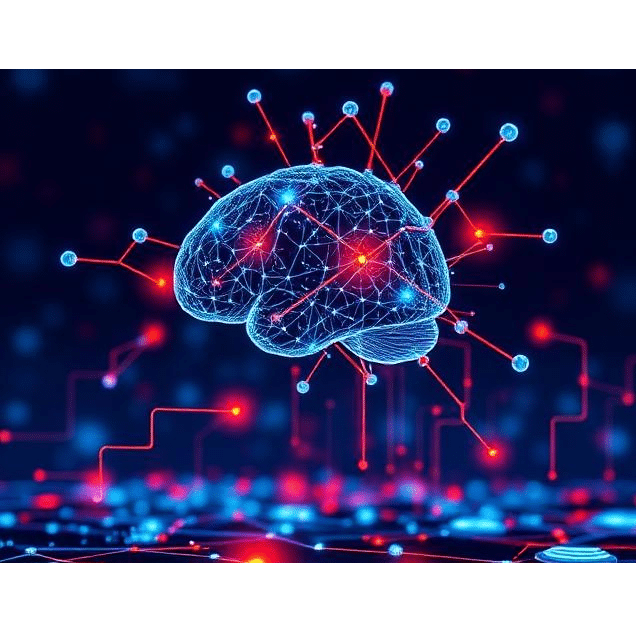
Understanding Deep Learning in 2026
Deep learning analyzes and interprets data using artificial neural networks. Inspired by the structure and operation of the human brain, these networks take the input and filter and convert them into meaningful outputs across numerous layers. As a result, this hierarchical approach permits deep learning models to learn complex correlations, patterns, and representations in the data.
Applications for deep learning across various industries, including:
Computer Vision
Classification and recognition of 1 Image
Object detection and segmentation
Image generation and manipulation
Facial recognition and biometrics are 4
- NLP (Natural Language Processing)
- Language translation and localization are the two terms that I am covering in this section.
- The work centers around sentiment analysis and text classification.
- Text summary and generation
- Examples include chatbots and Virtual assistants
- Speech Recognition
- Voice Text Systems, and they could integrate with voice assistants.
- Speech-to-speech translation
- Audio classification and music generation
Robotic and Autonomous Systems
- Systems for control and navigation
- Motion planning and decision-making
- Sensor processing and perception
Healthcare
- Analysis and diagnosis of medical imaging
- Disease detection and prediction
- Personalised medicine and treatment guidelines
Finance and Economics
- Predictive modelling and risk analysis
- Portfolio analysis and portfolio management
Credit scoring and fraud detection (3)
- Marketing and Advertising
- Segmentation and targeting of customers
- Personalized advertising and what we call recommendation systems
- Brand monitoring and Sentiment analysis
Security and Surveillance
- Detection of intrusion and threat analysis.
- Facial recognition and biometrics are the same.
- A ring for object detection and tracking
Gaming and Entertainment
- AI-powered characters and game development
- Experiences that are personalized to the gamer
- Content generation and recommendation is a common task.
Autonomous Vehicles
- Self-driving cars and trucks
- Navigation and control systems
- Sensor processing and perception
Deep Learning Libraries
Some of the popular libraries and frameworks required for deep learning include
In this post, we will talk about some of the most important and must-know libraries for deep learning.
- TensorFlow
- Google developed an open-source platform.
- learning model and algorithm.
- Provides a suite of tools for training, testing, and then deploying models.
PyTorch
A framework built by Facebook that is open source. Rapid prototyping and dynamic computation graphs. Made to work with GPU acceleration and distributed training.
Keras
It’s a high-level neural networks API written in Python that can run on top of TensorFlow, PyTorch, or Theano Theano provides an easy-to-use interface for building and training neural network models.
Theano
Python library for efficient computation and evaluation of mathematical expressions, GPU acceleration, and autodiff. Can be used for building and training of deep learning models.
The Microsoft Cognitive Toolkit (CNTK)
Supports a wide range of deep learning models and algorithms and is a commercial-grade, open-source framework. It provides training, testing, and deploying model tools.
Cafe
Supports convolutional neural networks (CNNs) and recurrent neural networks (RNNs), Provides tools for training, testing and deploying models All within a deep learning framework for computer vision tasks.
OpenCV
A deep learning computer vision library supporting CNNs and other deep learning models. Offers image and video processing, feature detection, and object recognition tools.
Scikit-learn
A library with machine learning capabilities that includes some deep learning supports neural networks, CNNs, and RNNs and provides tools for classification, regression, clustering, and many other tasks.
MXNet
Open-source framework for deep learning supports a variety of models and algorithms. Offers training, testing, and deploying the model’s toolkit. The main tools and infrastructure that we need to build, train, and deploy deep learning are deep learning and frameworks. If you need to build a complex application, you will need a library or a framework.
Deep Learning’s Importance in the Real World:
Improved Accuracy:
In many tasks, such as image recognition, speech recognition, and natural language processing, deep learning models can achieve state-of-the-art performance.
Automation:
With the use of deep learning, we can automate complex tasks like analysis of data, decision-taking, and prediction so that we can focus on repetitive and time-consuming tasks.
Efficient Data Analysis:
Large amounts of data, extracting relevant features, and providing insights are all things that deep learning can do, making it an important tool in data-driven decision-making.
Personalization
Personalized experiences (product recommendations, content curation, and tailorings) help customers to feel satisfied.
Healthcare Advancements
Medical diagnosis, disease detection, and personalized treatment recommendations all employ deep learning, revolutionizing healthcare.
Enhanced Safety:
Deep learning enhances safety across a range of industries, including self-driving cars, surveillance, and predictive maintenance.
Scientific Discoveries:
Deep learning makes scientific discovery faster, whether it’s climate modeling or material science or genomics research.
Economic Growth:
Deep learning moves economies forward by leveraging both optimized processes and increased efficiency in multiple industries while opening new opportunities.
Social Impact:
Social challenges, like education, accessibility, and environmental sustainability, are addressed positively by deep learning.
Innovation:
The innovation that deep learning in 2026 fosters allows for the creation of novel products, services, and applications that disrupt entire industries and completely upend how we work and live.
Deep learning is important to industry, to how we live and work, to economic growth, and to addressing social and environmental challenges.
What is deep learning doing to the world?
Image Recognition
AGI is being driven by deep learning and could revolutionize industries and change the way we live.
Autonomous Systems
Autonomous vehicles, drones, and robots are made possible by deep learning, which has changed the way we move and do business.
Personalized Medicine:
Deep learning helps for personalized treatment recommendations, disease diagnosis, and drug discovery, shaking it up in healthcare.
Smart Cities:
Deep learning in 2026 saves energy, traffic flow, and public services to make cities more efficient and sustainable.
Climate Change:
Predicting climate patterns, assessing deforestation, and optimizing use of renewable energy sources all benefit from deep learning and the path to a more sustainable future.
Virtual Assistants:
Virtual assistants, customer service, home automation, and personal productivity are powered by deep learning.
Cybersecurity
Threat detection, predictive analytics, and incident response are strengthened by deep learning cybersecurity.
Education
Education is transformed by deep learning that leads to better personalized learning, adaptive curricula, and intelligent tutoring systems.
Accessibility:
Image recognition, speech recognition, and natural language processing are made possible by deep learning and are accessible to people with disabilities.
Scientific Discoveries:
In astronomy, materials science, genomics, and more, deep learning is accelerating scientific breakthroughs, spurring innovation.
Economic Growth:
With deep learning, businesses are seeing improvements in their business processes, forecasting market trends, and opening new possibilities of growth of the economy.
The Impact of Deep Learning in 2026
Social Impact
Social challenges, education, healthcare, and environmental sustainability are addressed by deep learning and are all benefiting society.
Deep learning contributions are changing industries, changing how we live and work, and changing things for the better across many facets of our lives.
# Summary
The technology of deep learning in 2026 is rapidly transforming the future. It’s undeniable that it has applications, libraries, and importance in the real world. Deep learning will be a key enabler in creating a more efficient, more personalized, and more intelligent world, and we all continue to push the boundaries of what’s possible. This technology represents a technology that individuals, organizations, and societies will have to embrace if we are to thrive out there in the years to come.
External source … Top 10 Deep Learning Algorithms You Should Know in 2026